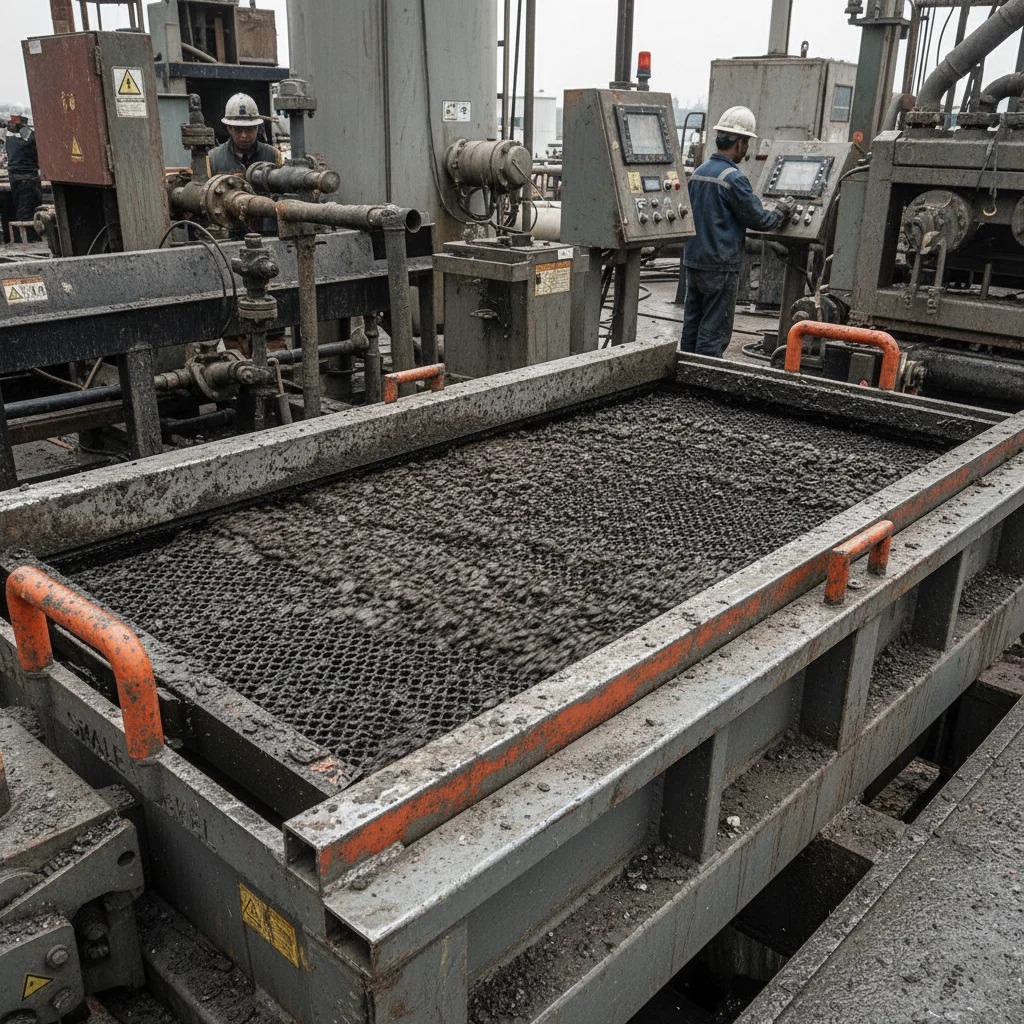
China Replacement Shaker Mesh refers to high-precision filtration screens engineered to replace original equipment manufacturer (OEM) panels in shale shakers used for drilling fluid solids control. These components are critical for separating drill cuttings from the mud, ensuring that the fluid returned to the wellbore is free of oversized particles that could cause circulation issues or equipment damage.
In the demanding environment of oil and gas drilling, operators often struggle with the high cost of OEM screens and the frequent downtime caused by abrasive formations. Finding a balance between rigorous API standards and operational cost-efficiency is a primary challenge for procurement teams and drilling engineers globally.
This technical analysis explores the engineering specifications, performance advantages, and selection criteria for premium replacement screens, specifically focusing on how API RP 13C compliance ensures that alternative meshes maintain the productivity and equipment protection required for complex drilling operations.

1Understanding the Role of Shale Shaker Mesh

The shale shaker mesh acts as the first line of defense in the solids control system. Its primary purpose is to remove larger drill cuttings from the drilling mud via vibration and filtration. High-quality replacement meshes are designed to provide a precise cut-point, ensuring that only the desired particle sizes are removed while allowing the mud to pass through efficiently.
When utilizing replacement screens, the goal is to maintain a high conductance rate. Conductance refers to the ease with which fluid passes through the mesh; if this is too low, "mud over" occurs, leading to fluid loss and decreased drilling efficiency.
Modern replacements utilize advanced materials like Stainless Steel 304 and 316L to ensure that the structural integrity of the mesh is maintained even when exposed to corrosive drilling chemicals and high-pressure environments.
2Core Technical Specifications and API Standards
Adherence to the API RP 13C standard is the benchmark for measuring the performance of shale shaker screens. This standard ensures that the mesh provides consistent aperture sizes and conductance, allowing operators to predict solids removal efficiency with mathematical precision across different API designations, such as API 40 through API 325.
The construction of these screens often involves pre-tensioning, which prevents the mesh from sagging under the weight of the mud. This stability is essential for maintaining a consistent gap and preventing premature wear or blinding during heavy-load operations.
For specific models like the FT-VSM 300SE, dimensions are calibrated to a precise 203x686 mm to ensure a leak-proof fit. Any deviation in sizing can lead to fluid bypass, which reduces the effectiveness of the entire solids control sequence.
3Operational Application in Harsh Drilling Scenarios
In abrasive formations, such as sandstone or quartz-heavy layers, shaker screens are subjected to intense friction. High-performance replacement mesh is engineered to resist this abrasion, extending the working life to between 240 and 360 hours, compared to the 150-200 hours seen in generic alternatives.
Another critical scenario is the use of Lost Circulation Materials (LCM). These materials can often blind screens, causing immediate throughput drops. Specialized layered constructions allow for a more resilient surface that resists plugging, reducing the frequency of expensive screen changes during critical loss events.
Directional drilling often accelerates wear due to higher solids loading and varying angles of impact on the screen. In these cases, the durability of the SS 316L body becomes a decisive factor in maintaining operational uptime.
4Performance Analysis: Replacement vs. Standard Screens
Comparing premium replacements to standard generic screens reveals a significant gap in longevity and accuracy. While generic screens may offer lower initial costs, their variable separation accuracy leads to unpredictable mud processing rates, which can jeopardize the overall drilling timeline.
The use of pre-tensioned layers in premium China replacement mesh minimizes blinding, which directly correlates to higher fluid conductance. This ensures that the shaker can handle higher flow rates without overflowing, optimizing the throughput of the mud system.
China Replacement Shaker Mesh Performance Metrics
Data indicates that the investment in higher-grade stainless steel and API-certified manufacturing results in a lower total cost of ownership (TCO). This is achieved through reduced replacement frequency and decreased wear on the shaker's mechanical components due to optimized fluid flow.
5Procurement Guide and Selection Criteria
Selecting the correct shaker mesh requires an analysis of the target solids separation size. Higher API numbers, such as API 325, are designated for removing fine particles, whereas lower numbers like API 40 are used for coarser cuttings. The choice must align with the specific mud weight and the formation being drilled.
Compatibility is another non-negotiable factor. For users of Brandt VSM 300 SE, the replacement mesh must match exact dimensions and frame specifications to ensure a secure fit. Using incorrectly sized screens can lead to vibration instability and frame damage.
Finally, the "repairable" feature of certain layered designs offers a significant advantage. Being able to address surface damage without replacing the entire assembly can lower long-term operational costs, especially in high-abrasion environments.
6Maintenance and Lifespan Optimization
To maximize the lifespan of shale shaker screens, operators should implement a rigorous wear-monitoring program. Tracking actual working hours—typically targeting the 240-360 hour window—allows for proactive replacement before a screen failure causes a mud overflow event.
Proper cleaning intervals and the avoidance of excessive pressure during cleaning can also prevent the stretching of the mesh. Maintaining the tension of the screen is key to preventing the "blind spots" that reduce separation efficiency.
Inventory optimization is equally critical. Maintaining a stock of various API designations on-site prevents costly drilling downtime when formation changes necessitate a sudden shift in mesh size.
7Compatibility and Strategic ROI Comparison
When evaluating the ROI of switching from OEM to premium replacements, the primary metric is the reduction in downtime and the cost per hour of operation. Premium replacements deliver OEM-equivalent protection but at a significantly lower procurement cost.
The following comparison illustrates the differences between generic steel screens and high-performance API-certified replacements across several key operational metrics.
| Metric | Generic Screens | Premium Replacement | Impact on Operation |
|---|---|---|---|
| Working Life | 150 - 200 Hours | 240 - 360 Hours | Lower replacement frequency |
| Material Grade | Generic Steel | SS 304/316/316L | Higher corrosion resistance |
| Separation Accuracy | Variable | Strict API RP 13C | Predictable mud processing |
| Maintenance Cost | High (Frequent Change) | Low (Extended Life) | Reduced operational expenditure |
| Equipment Wear | Moderate | Minimal | Protected downstream gear |
| Fitment | Approximate | Exact Dimensional Match | Leak-proof installation |
Ultimately, the choice of mesh is a trade-off between initial cost and long-term reliability. For high-stakes drilling operations, the precision and durability of API-certified replacement screens provide a clear strategic advantage in both cost and performance.
Frequently Asked Questions
Conclusion
Selecting the right China Replacement Shaker Mesh is a critical decision that impacts both the immediate efficiency of the solids control system and the long-term maintenance budget of a drilling operation. By prioritizing API RP 13C compliance and high-grade materials like SS 316L, operators can achieve a balance of durability, precision, and cost-effectiveness.
For procurement teams and engineers evaluating suitable filtration solutions to reduce downtime and operational costs, detailed product specifications and compatibility guides can be reviewed at www.ftshaleshakerscreen.com.