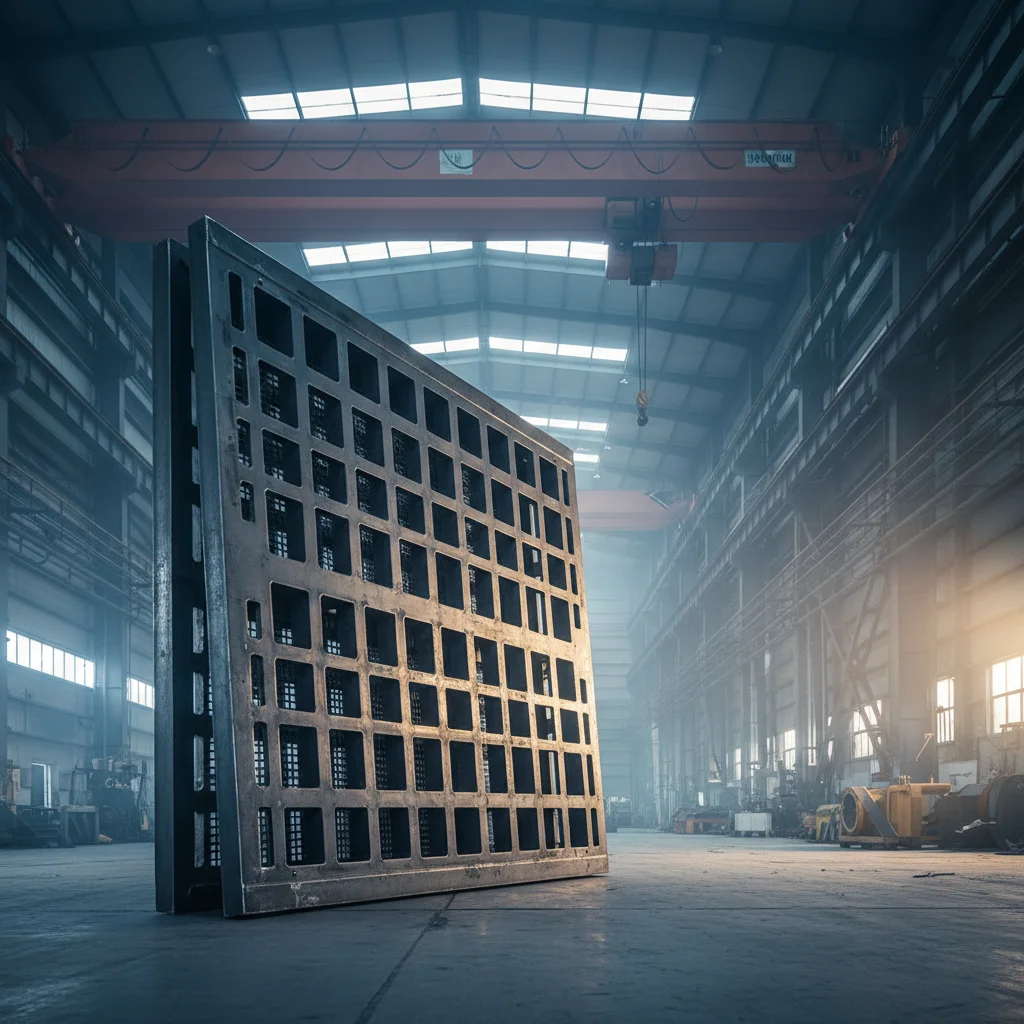
In the demanding environment of oil and gas drilling, the efficiency of solids control systems depends heavily on the precision and durability of the screening media. The global shift toward high-density drilling fluids and complex directional trajectories has placed unprecedented stress on China drilling shaker screens, which must now balance rapid fluid conductance with rigorous particle separation.
The primary challenge for drilling engineers is the trade-off between screen blinding and abrasive wear. When drilling through high-solids formations or utilizing lost circulation materials (LCM), standard screens often fail prematurely, leading to increased downtime and soaring operational costs. This technical pressure has driven the industry toward specialized replacement screens that can match OEM performance while offering greater resilience against high-density mud erosion.
This analysis examines the engineering specifications and material selection required to optimize shaker performance. By evaluating conductance numbers and separation micron ratings, operators can better select China drilling shaker screens that reduce fluid loss and extend the working life of the solids control equipment.

Fluid Dynamics and Screening Mechanisms

The core mechanism of a shale shaker screen is the separation of drill cuttings from the drilling fluid through a combination of linear vibration and precise mesh aperture sizing. The fluid dynamics are governed by the screen's open area and conductance, which determine how quickly the mud can pass through while retaining solids.
In high-solids loading scenarios, such as directional drilling, the screen faces the risk of "blinding," where particles plug the mesh openings. This reduces the effective flow area, increasing the mud level on the shaker and potentially leading to fluid carry-over, which wastes expensive drilling additives and degrades mud properties.
Critical Technical Specifications Analysis
Selecting the right screen requires a deep understanding of API RP 13C standards. For instance, the FT-M/M model series utilizes stainless steel 304, 316, or 316L to ensure chemical compatibility with various mud types. The frame material, typically Q235 steel or composite, provides the necessary structural rigidity to withstand the G-forces generated by the shaker motor.
A critical parameter is the D100 separation value, which defines the particle size that is 100% retained. For example, a screen with an API 200 designation is engineered to provide specific separation microns, whereas an API 325 screen is used for much finer filtration. The choice between XR, XL, HC, or MG series allows engineers to optimize the conductance number based on the flow rate of the mud pumps.
The working life of these screens typically ranges between 240 to 360 hours, depending on the abrasiveness of the formation. By matching the mesh type to the expected solids loading, operators can maximize this window, reducing the frequency of screen changes and minimizing the risk of operational downtime during critical drilling phases.
Material Fatigue and Abrasion Resistance
Abrasive formations, such as sandstone or conglomerate, act as sandpaper on the screening surface. The mechanical wear is concentrated on the crown of the mesh wires, leading to aperture enlargement and a loss of separation efficiency over time.
Furthermore, the transition from OEM parts to high-performance replacements requires strict adherence to tolerances. Any misalignment in the 1165585 mm size specification can lead to vibration harmonics that accelerate fatigue, potentially destroying the screen frame within a fraction of its expected service life.
Comparative Conductance Evaluation
Conductance is the primary indicator of a screen's ability to handle fluid volume. A higher conductance number allows for faster processing of mud, which is critical when drilling at higher ROP (Rate of Penetration). However, increasing conductance often requires larger apertures, which can compromise the fineness of the solids separation.
Engineering a balanced screen involves optimizing the non-blank area—typically around 5.2 sq.ft for Mongoose-compatible models—to ensure maximum fluid throughput without sacrificing the API RP 13C separation standards. The following assessment provides a normalized view of how different configurations impact overall efficiency.
Normalized Engineering Assessment of Screen Profiles
Deployment in Harsh Geological Formations
In representative engineering scenarios involving high-density mud and abrasive cuttings, the choice of screen series—such as the HC or XL—becomes a decisive factor. When pumping lost circulation materials (LCM) to seal fractures, the risk of screen blinding increases exponentially. Using a low-cost but high-efficiency replacement design allows operators to change screens more frequently without significantly impacting the budget.
Directional drilling further complicates the process by increasing the solids loading per gallon of fluid. The resulting abrasion accelerates the wear of the mesh wires, making it imperative to use screens that meet API Q1 and ISO 9001 certifications. This ensures that the replacement parts maintain a consistent aperture size throughout their 240-360 hour working life, maintaining a stable D100 separation threshold.
Future Trends in Solids Control Media
The industry is moving toward "smart" solids control, where real-time sensors monitor screen blinding and fluid conductance. While the physical mesh remains the primary barrier, the integration of composite materials into the frame is reducing the overall weight of the screen (currently around 11.6 kg for the FT-M/M), which reduces the strain on the shaker's vibration system.
Furthermore, there is an increasing demand for specialized screens that can handle ultra-fine particles without sacrificing flow. The development of hybrid mesh architectures—combining different weave densities—is an emerging R&D direction. This approach aims to maximize the non-blank area while providing a sharper cut-off point for solids separation.
As drilling moves into deeper, higher-pressure reservoirs, the chemical composition of drilling fluids will continue to evolve. Future screens will likely require advanced alloys beyond standard 316L to resist the corrosive effects of high-temperature, high-salinity environments, ensuring that the solids control system remains the first line of defense against borehole instability.
Screen Selection Engineering Matrix
Selecting the appropriate China drilling shaker screens requires a systematic comparison of technical profiles. Engineers must evaluate the API designation against the expected particle size distribution (PSD) of the cuttings to avoid premature blinding or excessive fluid loss.
The relationship between mesh type and conductance is not linear. A screen designated as API 100 may have significantly different conductance numbers depending on whether it is an XR or HC series. This variation directly impacts the mud throughput and the resulting quality of the cleaned fluid returned to the active system.
The following matrix provides a framework for selecting the right configuration based on the specific operational profile of the drilling rig.
| Configuration Profile | API Designation | Conductance Factor | Recommended Use Case |
|---|---|---|---|
| Basic Configuration | API 100-140 | Moderate | Standard Clay Formations |
| Standard Configuration | API 170-200 | Balanced | Mixed Lithology Drilling |
| High-Duty Configuration | API 230-270 | Lowered | High-Density Mud Systems |
| Precision Configuration | API 325 | Minimum | Ultra-Fine Solids Removal |
| Automated/High-Flow | API 60-80 | Maximum | High ROP / Large Cuttings |
| Industry Baseline | API 120 | Reference | General Purpose Solids Control |
Technical FAQ
The API designation refers to the mesh size; a higher API number indicates a finer mesh with smaller apertures. As the mesh becomes finer (e.g., moving from API 100 to API 325), the conductance number typically decreases because the open area for fluid to pass through is reduced. This increases the resistance to flow, which may slow down the mud processing rate but ensures that finer particles are removed from the system.
Stainless steel 304 is suitable for most standard drilling environments. However, 316L is recommended for operations involving higher chloride concentrations or corrosive drilling fluids, as the addition of molybdenum provides superior pitting and crevice corrosion resistance. For high-salinity muds or offshore environments, 316L significantly extends the screen's structural integrity and service life.
The variance depends on the abrasiveness of the formation and the solids loading. Drilling through soft shales may allow the screen to last up to 360 hours, whereas abrasive sandstone or high-barite muds increase the rate of wire wear, potentially reducing the lifespan to 240 hours. Regular monitoring of the separation efficiency is required to determine the optimal replacement interval.
LCM particles are often irregular in shape and can easily plug the mesh. To prevent blinding, operators should select screens with a higher conductance number or use a coarser API designation during LCM pumping. Additionally, ensuring the shaker is operating at the correct G-force helps vibrate the particles off the screen surface more effectively, maintaining fluid throughput.
Yes, high-quality replacement screens are engineered to match the exact dimensions and fitment of OEM brands such as Swaco, Brandt, and FSI. For example, the FT-M/M model is specifically designed for Mongoose and Meerkat systems. It is crucial to verify the frame dimensions (e.g., 1165585 mm) and the mounting interface to ensure a secure fit and prevent vibration-induced fatigue.
The non-blank area is the actual surface of the mesh that allows fluid and solids to pass through. For a screen of 1165585 mm, a non-blank area of 5.2 sq.ft ensures that the maximum possible volume of mud is processed. If the blank area (the solid frame part) is too large, the effective conductance drops, increasing the risk of mud overflow and decreasing the overall efficiency of the solids control system.
Engineering Summary and Practical Implications
The optimization of solids control depends on the precise alignment of screen specifications with the geological and fluid requirements of the well. We find that maximizing the conductance number while adhering to API RP 13C separation standards is the most effective way to reduce non-productive time (NPT) and lower the total cost of fluid maintenance.
For drilling engineers, the practical implication is clear: the transition to high-performance China drilling shaker screens allows for a more aggressive drilling schedule without compromising the integrity of the drilling mud. By prioritizing material grade and accurate D100 separation, operators can ensure a reliable, cost-effective solution for the most challenging drilling environments.