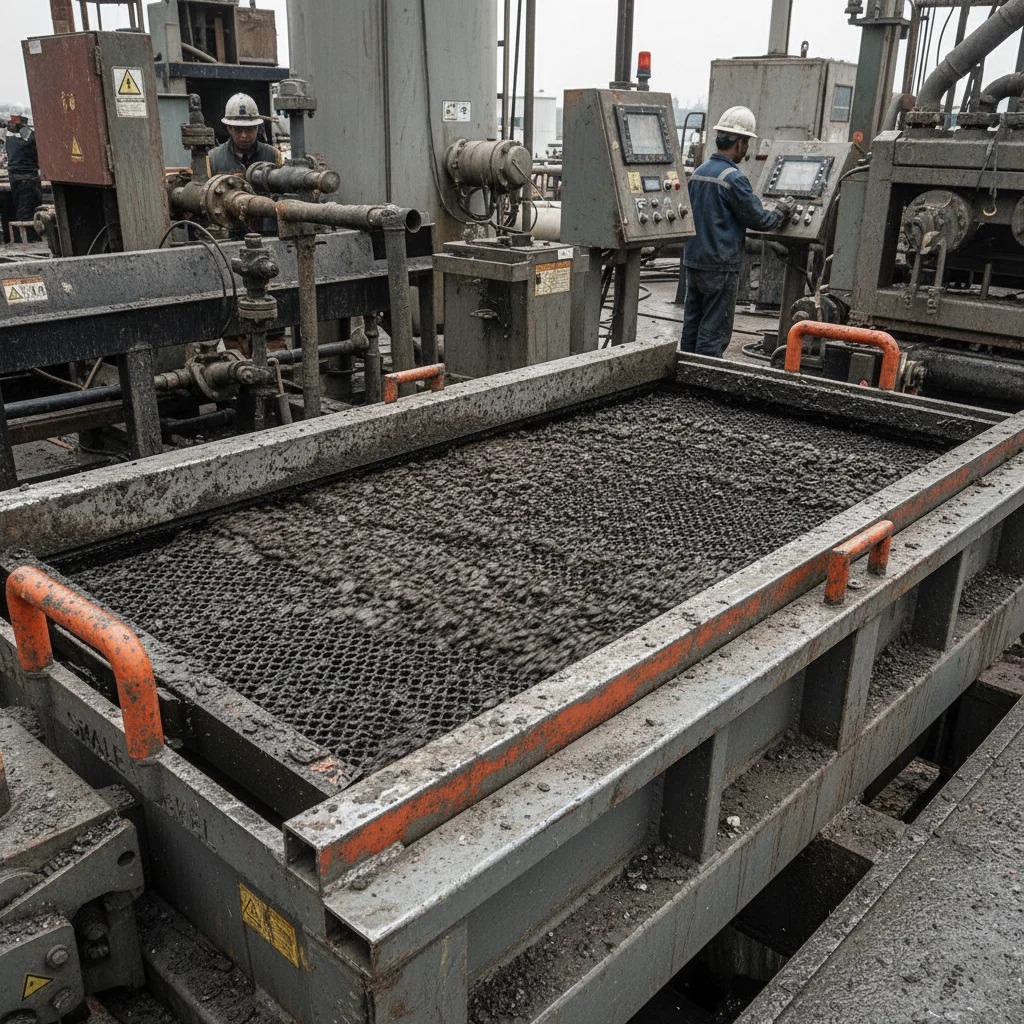
Managing solids control in high-pressure drilling environments requires a delicate balance between fluid retention and debris removal. The efficiency of this process hinges almost entirely on the integrity and precision of the shaker screens used to separate drilled cuttings from the mud.
When operational costs climb due to rapid screen wear or frequent downtime, operators often seek alternatives that maintain OEM-level performance without the premium price tag. This shift has led to an increased focus on high-specification replacements that adhere to global industry standards.
Understanding the technical nuances of a China Shale shaker screen allows drilling managers to optimize their equipment lifespan while ensuring that fluid costs remain under control.

The Mechanics of Solids Separation

At its core, a shaker screen acts as the primary filter in the drilling fluid system. By utilizing G-force and vibration, the screen separates larger cuttings from the drilling mud, which is then recirculated. The precision of the mesh aperture determines the "cut point," meaning the smallest particle size that can be effectively removed.
For operators using equipment from brands like SWACO or Brandt, the challenge is finding replacements that match the exact conductance and structural rigidity of the original parts. When a screen fails to meet these specs, it leads to "mud over the shaker," increasing fluid loss and compromising borehole stability.
Technical Specifications and API Standards
The industry benchmark for these components is the API RP 13C standard. This ensures that screens are manufactured with consistent aperture sizes and structural integrity. For instance, professional-grade replacements often utilize Stainless Steel 304, 316, or 316L to resist the corrosive nature of drilling fluids, paired with a Q235 steel frame for mechanical support.
Technical precision is evidenced in models like the FT-ALS-2, which are designed to fit SWACO ALS-2 systems. With dimensions of 1141x1210 mm and a weight of approximately 6.15 kg, these screens must balance weight with durability to ensure they do not stress the shaker motor while providing a working life of 240 to 360 hours.
Designations ranging from API 18 to API 325 allow engineers to choose the exact separation level required for the specific geological formation they are penetrating. Higher API numbers indicate finer meshes, which provide better separation but may be more prone to blinding if the mud contains high concentrations of Lost Circulation Materials (LCM).
Addressing Operational Wear and Tear
The operational environment of a drilling rig is inherently hostile. Abrasive formations, such as sandstone, can shred through standard screens in a matter of hours. Additionally, high-density muds containing barite can erode the mesh wires, leading to premature failure and increased downtime.
The primary cause of premature screen failure is often a combination of abrasive wear and mechanical fatigue caused by improper tensioning or inexperienced crew handling during the break-in period.
To counter these issues, manufacturers have focused on increasing the robustness of the mesh weave. By optimizing the material grade and the bonding process between the screen and the frame, replacement options can offer OEM-equivalent protection while significantly lowering the total cost of ownership for the drilling contractor.
Evaluating Conductance and Separation Efficiency
Conductance is a critical metric that defines how easily fluid passes through the screen. A low conductance number indicates a tighter mesh that provides superior separation (lower D100 microns) but restricts flow. Conversely, higher conductance numbers facilitate faster fluid throughput but allow larger particles to remain in the mud.
Finding the "sweet spot" involves matching the API designation to the current drilling phase. During the top-hole section, coarser screens are used to handle large volumes of cuttings; as the well deepens and formations become finer, the operator shifts toward higher API numbers to protect the downstream centrifuge and desander.
Figure 2. Relative Separation Efficiency by API Designation
Practical Application Scenarios
In a typical industrial setting involving directional drilling, the solids loading is significantly higher than in vertical wells. This acceleration of wear requires a more aggressive replacement schedule. Operators in these scenarios often transition to high-performance replacement screens to manage the increased costs of frequent changes.
Another critical scenario is the use of Lost Circulation Materials (LCM). When pumping LCM to seal off porous formations, screens are highly susceptible to "blinding"—where particles plug the mesh apertures. Using a budget-friendly but efficiency-matched screen allows crews to change panels more frequently without incurring the prohibitive costs associated with OEM brands.
Future Shifts in Screen Materials
The trajectory of solids control technology is moving toward materials that offer a higher strength-to-weight ratio. While stainless steel remains the standard, there is ongoing research into composite coatings that can further reduce friction and prevent blinding.
User expectations are also shifting. There is a growing demand for screens that can operate across a wider range of G-forces without losing their structural shape. This requires a deeper understanding of the interplay between the frame's elasticity and the mesh's tensile strength.
As drilling moves into more extreme environments—such as ultra-deepwater or high-temperature high-pressure (HTHP) wells—the reliability of the China Shale shaker screen will be judged not just by its API compliance, but by its ability to maintain conductance under extreme mechanical stress.
Replacement Selection Framework
Selecting the right replacement screen is a trade-off between separation precision, throughput, and cost. An operator must evaluate the current mud weight and the expected particle size of the formation before deciding on the API designation.
When comparing replacement options for brands like Kemtron, Scomi, or FSI, the focus should remain on the material grade and the warranty period. A one-year warranty, as seen in some professional lines, provides a baseline of trust in the manufacturing process.
The following framework helps in determining the suitability of a screen based on the drilling challenge faced on the rig.
| Operational Challenge | Priority Factor | Recommended API Range | Material Suggestion |
|---|---|---|---|
| Abrasive Sandstone | Wear Resistance | API 60 - 120 | Stainless Steel 316L |
| High Barite Loading | Erosion Control | API 140 - 200 | Reinforced Mesh |
| LCM Blinding | Replaceability | API 100 - 170 | Standard SS 304 |
| Directional Drilling | Throughput | API 80 - 140 | High-Conductance Mesh |
| Deep-hole Precision | Cut Point | API 270 - 325 | Fine Weave 316 |
| General Purpose | Cost-to-Life Ratio | API 140 - 200 | Standard SS 304 |
Questions & Answers
The API RP 13C standard provides a rigorous set of guidelines for the manufacturing and testing of shale shaker screens. It ensures that the aperture size, mesh consistency, and overall structural integrity meet a global baseline. For the operator, this means predictable performance; a screen designated as API 200 will have a consistent cut point, preventing unexpected mud loss and ensuring that solids removal is efficient regardless of the manufacturer.
The most obvious sign is "mud over the shaker," where fluid begins to bypass the screens and flow over the edges. This is often caused by blinding or holes in the mesh. Other indicators include a noticeable increase in the solids content of the processed mud (detected via retort analysis) and physical wear on the mesh wires, which can be observed during routine inspections. A drop in the separation efficiency usually signals that the screen has reached the end of its working life.
Yes, provided the replacement is manufactured to the same material and API specifications. Many high-quality replacements use the same 304 or 316 stainless steel and precision weaving techniques as the original equipment manufacturers. The key is ensuring the conductance number and dimensions (such as the 1141x1210 mm size for ALS-2 models) are exact. This allows for a seamless fit and equivalent separation efficiency at a significantly lower operational cost.
Stainless Steel 316 and 316L offer superior corrosion resistance compared to 304, primarily due to the addition of molybdenum. In environments with high chloride levels or highly acidic fluids, SS 316 is the preferred choice as it resists pitting and crevice corrosion. For standard drilling muds and less aggressive formations, SS 304 provides a cost-effective and durable alternative that meets most operational requirements.
This balance is managed by selecting the correct API designation. If you need higher throughput (faster fluid return), you should choose a screen with a lower API number (e.g., API 80), which has a higher conductance. If you need precision (removing smaller particles), you shift to a higher API number (e.g., API 200). The ideal strategy is to use a "pyramid" approach, starting with coarse screens and gradually moving to finer meshes as the mud properties and formation change.
The weight of the screen affects the load on the shaker's motor and vibration system. Excessively heavy screens can lead to premature bearing wear or motor failure. Conversely, screens that are too light may lack the structural rigidity needed to withstand high G-forces, leading to sagging and reduced separation efficiency. Professional replacements are engineered to match OEM weights (e.g., 6.15 kg for FT-ALS-2) to ensure mechanical harmony within the system.
Final Thoughts
Optimizing the solids control system is not merely about purchasing the most expensive components, but about selecting the right technical specifications for the specific geological challenge. By focusing on API standards, material grade, and conductance, operators can maintain high separation efficiency while drastically reducing their overhead.
As the industry continues to push into more complex formations, the reliance on precision-engineered replacements will only grow. Ensuring that your China Shale shaker screen is matched to your rig's specific needs is the most effective way to future-proof your drilling operations against rising costs and unexpected downtime.